“And This Is How I Came to Politics”: Honouring Caribbean Women Movement Makers

by March 5, 2026

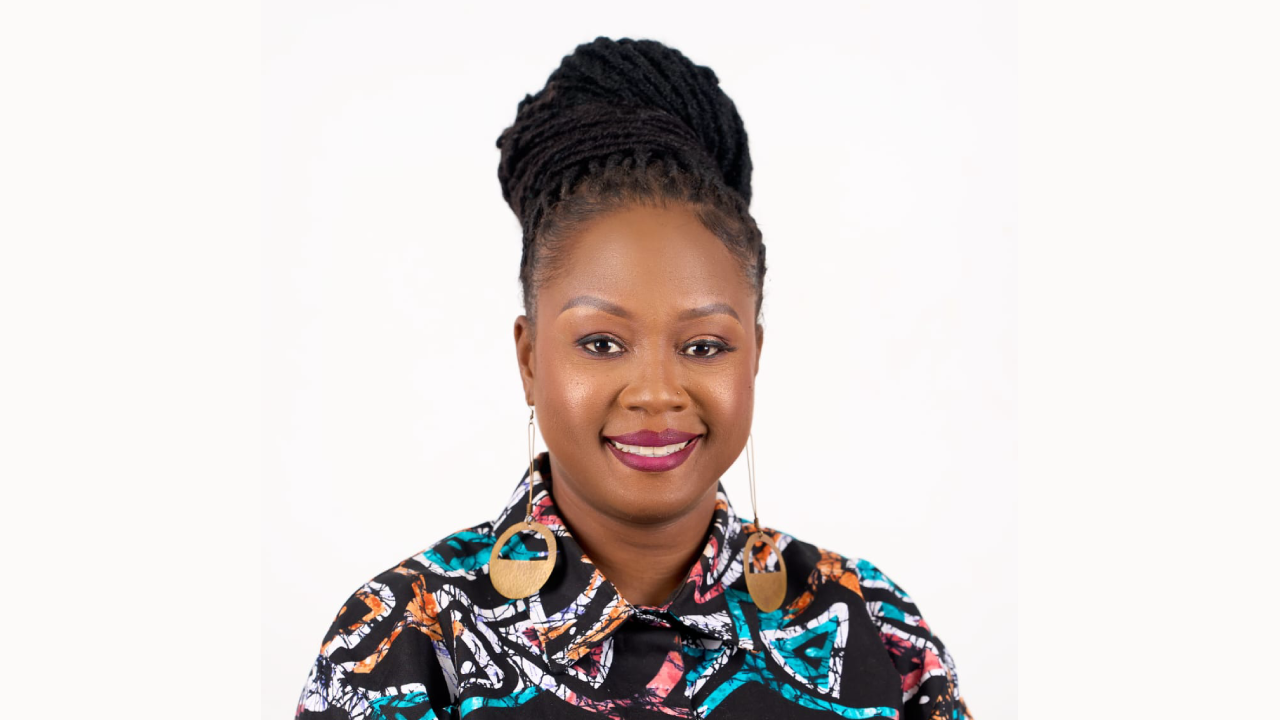
Message from Dr. Halimah DeShong

University Director, Institute for Gender and Development Studies, The University of the West Indies

For International Women’s Day and Women’s Herstory Month 2026

In her 2002 delivery of the Lucille Mathurin Mair Distinguished Lecture, hosted by the then Centre for Gender and Development Studies (IGDS), University of the West Indies (UWI), Mona Campus, the late Guyanese activist Andaiye situated her journey to activism as follows: “Race/ethnicity/colour; class; nation; gender; age: from childhood I could feel—if not understand—their interaction in my life. And this is how I came to politics.”

The indivisibility of the personal from activist politics animates so many stories shared by women movement makers, across space and time, in our Caribbean. This is true of women’s activist past and present.

Deep personal investments often accompany Caribbean women’s engagement in actions to shift conditions of inequality. Recently, at a gathering of women’s organisations in Jamaica, Judith Wedderburn, co-founder of WMW Jamaica (formerly Women’s Media Watch), reflected on the emergence of the organisation. According to Wedderburn, WMW’s official office began in the trunk of her car, with meetings held at her home in the early days. The personal has always tangibly figured in how Caribbean activist women show up for each other, and for their communities.

Another such example is the Grenada Community Development Agency (GRENCODA). In terms of its longevity and reach, GRENCODA remains one of the most impactful community-based organisations in the region. Its late visionary leader, Judy Williams, bequeathed a legacy of service, movement-building, and civil society–government partnerships at the national and regional levels. It was during her leadership that GRENCODA supported the formation of the invaluable Legal Aid and Counselling Clinic (LACC) and a national youth training agency (both in Grenada) and, at the regional level, the Caribbean Policy Development Centre (CPDC).

Women’s organising in the Caribbean Community (CARICOM) region has always existed at the intersection of the formative, personal, intimate, and shared, in relation to those arrangements which abound in our political economy. Stories of partnership for change among women are observable in the emergence of entities like Sistren Theatre Collective (Jamaica), Red Thread (Guyana), Productive Organisation for Women (POWA) (Belize), Red Roots SVG (St. Vincent and the Grenadines), Helen’s Daughters (St. Lucia), Intersect (Antigua and Barbuda), and the Women’s Institute for Alternative Development (WINAD) (Trinidad and Tobago).

Our regional umbrella organising for gender and social justice, from the 1980s onwards, has seen the formation of pan-Caribbean Community organisations like the Caribbean Association of Feminist Research and Action (CAFRA) and the Caribbean Domestic Workers Network (CDWN). These organisations, their membership, and their leadership provide a critical body of knowledge and approaches for engaging advocacy and activism in our Caribbean. In fact, regional women movement makers are central to creating and sustaining teaching, learning, and research at the Institute for Gender and Development Studies and the Institute for Gender Studies at The UWI and the University of Guyana, respectively. It is for this reason that women activists in the academy remain connected as partners and as members of women’s organisations across the region.

Further, women’s organising in churches; political parties; service, social, and sporting clubs; workers’ unions; business; communities; families; as well as the critical contribution of women in brokering safety in conflict-ridden settings, too often go unacknowledged. These arrangements sustain communities and societies. Even with the tensions, trials, and challenges that exist in building these networks, the tremendous love and affective engagements needed to sustain organising and organisations deserve much more than periodic recognition. We ought to learn how our activists come to politics, what sustains them, and what is at stake if we ignore these inheritances.

With the escalation of geopolitical tensions in several regions of the world, including in our Caribbean, what lessons from our women movement makers might we draw? Perhaps the most obvious, but certainly not the only lesson, is the power of reckoning with our positionality in order to build strategic alliances grounded in love, respect, and a deep desire for wider futures.

The global theme prioritised for International Women’s Day (IWD) and Women’s Herstory Month (WHM) in 2026 invites us to advance “Rights. Justice. Action. For ALL Women and Girls.” None have been more generous than our Caribbean women movement makers. None are more deserving of our generosity in return. Let us commit to honouring Caribbean women, across various spheres of influence, with our thoughts, with our voices, and with our actions in this year and beyond. Their signal contribution provides the foundation on which we continue to organise to secure gender, racial, economic, and social justice for all in our region.